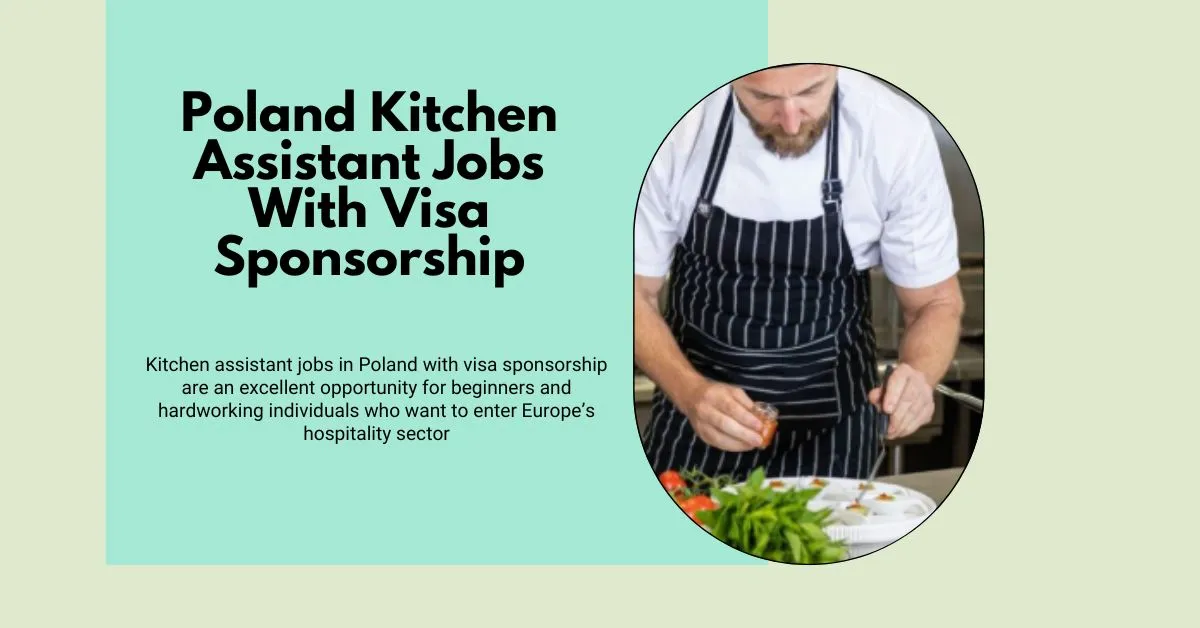
A culinary degree is not required to begin working in a professional kitchen. Sometimes it only requires timing, a strong work ethic, and a readiness to do some dishwashing as you learn the ropes. Jobs for kitchen assistants in Poland with sponsored visas in 2025 could be the key to your success if you’ve been searching for a useful career overseas.
Poland offers genuine prospects for anyone starting their career or seeking a new start in Europe, particularly in its expanding food, tourism, and hospitality sectors.
So let’s explore what these occupations are about, who can apply, and how to get started if you can handle a knife, wipe a counter, and work through a dinner rush.
Have you ever dreamed of starting fresh in Europe with a job that doesn’t demand years of study, just your hard work and dedication? Becoming a kitchen assistant in Poland in 2025 could be your breakthrough.
With an average monthly salary of PLN 3,500 – 4,200 (and up to PLN 4,500+ with overtime), free or subsidized meals, paid time off, and even employer-provided accommodation, these jobs offer both stability and opportunity. The best part? No culinary degree is required. All you need is energy, teamwork, and the willingness to learn.
Poland’s hospitality industry is thriving, and restaurants, hotels, and catering services are actively hiring international workers with visa sponsorship, making it easier than ever for non-EU candidates to relocate.
Employers value qualities like physical fitness, a positive attitude, and reliability over formal qualifications. In return, you’ll receive not just a paycheck, but also healthcare coverage, paid sick leave, and the chance to grow into higher roles in the kitchen.
Why Poland is Hiring Kitchen Assistants
Poland’s culinary culture is growing along with its economy. The need for kitchen workers is growing as new eateries, lodging facilities, canteens, and fast-food franchises operate in places like Warsaw, Kraków, Gdańsk, and Wrocław.
The problem is that not all positions are being filled by locals, particularly those in entry-level kitchens. International candidates, like you, can help with that. Nowadays, a lot of eateries and hospitality organizations support visas for people in critical positions, such as kitchen assistants.
Read Also: Cook Assistant/Kitchen Helper Jobs in Poland
What Does a Kitchen Assistant Do?
- Food Preparation: A significant part of the job involves helping chefs with basic food preparation. This can include washing and peeling fruits and vegetables, chopping and dicing ingredients, and portioning food items.
- Cleaning and Hygiene: Maintaining a clean and hygienic environment is a top priority. Kitchen assistants are responsible for washing dishes, pots, pans, and utensils, as well as cleaning and sanitizing work surfaces, floors, and kitchen equipment. They also handle waste disposal and ensure the kitchen is kept tidy and organized.
- Inventory and Storage: Kitchen assistants often assist with deliveries. This can involve unloading food and supplies, checking that the order is correct, and properly storing items in fridges, freezers, and dry storage areas. They also help with organizing stock and ensuring proper rotation (FIFO – first in, first out) to minimize waste.
- Assisting Chefs: During busy service times, the kitchen assistant is a vital support system for the chefs. This can involve fetching ingredients, passing tools, and ensuring everything the chefs need is readily available.
- Equipment Maintenance: You may be required to clean and maintain kitchen equipment, such as ovens, grills, and blenders, and report any faults or issues to your supervisor.
Who Can Apply for Kitchen Assistant Jobs in Poland?
Ideal Candidate Profile
Kitchen assistant jobs are a good fit for people who are:
- Beginners: The role is an excellent entry point for those looking to start a career in the European hospitality industry. Previous experience is a plus, but not always a requirement. Many employers are willing to train someone who is hardworking and eager to learn.
- Physically fit: The job is physically demanding and requires you to be on your feet for long periods, lift heavy items, and work in a fast-paced environment.
- Willing to relocate: Since most jobs are in specific cities or tourist areas, you must be prepared to move to Poland.
- Without a degree: Formal education is not typically required. Employers value a strong work ethic and good attitude more than a university degree for this kind of role.
- Team players: You will work closely with a team of chefs and other kitchen staff, so good communication and teamwork skills are essential.
Visa and Legal Requirements
To work legally in Poland as a non-EU citizen, you must have a valid work permit and a visa.
- Work Permit: Your employer must apply for a work permit on your behalf. Kitchen assistant roles often fall under the Seasonal Work Permit (Type S), which is specifically for jobs in hospitality and tourism and can be valid for up to 9 months.
- Visa: With an approved work permit, you can apply for a National (Type D) work visa at the Polish embassy or consulate in your home country. This visa allows you to stay and work in Poland for more than 90 days.
- No Criminal Record: A clean criminal record is a standard requirement for visa applications.
- Basic English or Polish: While some hospitality businesses operate primarily in Polish, many in larger cities or tourist areas use English. Having a basic command of either language is often sufficient to understand instructions and communicate with your team.
Visa Sponsorship: How It Works in Poland
Polish employers in 2025 are actively hiring foreign workers, and the process is straightforward under work permits and temporary residence visas.
How It Works
- Apply for a Job Online – Submit applications through job portals or recruitment agencies.
- Get a Job Offer & Contract—If selected, the employer provides you with an official contract.
- Employer Initiates Work Permit – Your employer applies for the required work permit from Polish authorities.
- Apply for a National Visa (Type D)—Using your job contract and work permit, you apply at the Polish embassy or consulate in your home country.
- Travel & Start Working Legally—Once approved, you can relocate to Poland and begin your employment.
Employer/Agency Support
Many employers and recruitment agencies also help with:
- Completing visa paperwork
- Handling work permit applications
- Providing accommodation near the workplace
- Assisting with local registration (PESEL number, residence cards, insurance)
Benefits of Poland Kitchen Assistant Jobs
1. Legal Status and a Pathway to Residency
The most significant advantage of a visa-sponsored job is the immediate legal right to live and work in Poland. This sponsorship is the first critical step for non-EU citizens to gain a foothold in Europe. Your employer initiates the process by obtaining a work permit on your behalf, which then allows you to apply for a national work visa (Type D).
Upon arrival, this visa enables you to apply for a Temporary Residence Permit, typically valid for up to three years. This permit not only solidifies your legal status but also acts as your primary identification document and allows for travel within the Schengen Area. Consistent employment and residency in Poland can eventually open the door to applying for Permanent Residency and, in the long term, Polish citizenship.
2. Financial Stability and Competitive Compensation
Poland’s economy offers competitive wages that provide a comfortable standard of living, especially when compared to the cost of living in many Western European countries. As of 2025, kitchen assistants can expect a gross monthly salary that aligns with or exceeds the national minimum wage, which is set to be PLN 4,666 (approximately €1,080) from January 2025.
Many employers in the hospitality sector offer tangible financial perks that significantly reduce daily expenses. These often include:
- Free or Subsidized Meals: Access to meals during shifts is a common benefit, lowering food costs.
- Accommodation Support: Some employers, particularly those actively recruiting foreign workers, provide free or low-cost shared accommodation, which is a major financial relief.
- Overtime Pay: The standard workweek is 40 hours, with opportunities for overtime compensated at a higher rate as mandated by Polish labor law.
3. Comprehensive Social Security and Healthcare
A legal employment contract guarantees access to Poland’s robust public social security system (ZUS). Your contributions, deducted from your salary, entitle you to a wide range of protections:
- Public Healthcare (NFZ): You and your registered family members gain access to the national healthcare fund, covering medical consultations, treatments, and hospital stays.
- Paid Sick Leave: In case of illness, you are entitled to receive 80% of your regular salary.
- Paid Annual Leave: All employees are legally entitled to paid vacation, ranging from 20 to 26 days per year, depending on their employment history.
- Pension and Disability Insurance: Your contributions build towards a future Polish pension and provide a safety net in case of long-term inability to work.
4. Professional Growth in a Thriving Sector
While a kitchen assistant is an entry-level position, it provides invaluable experience within the European hospitality industry. The skills acquired are transferable, and demonstrating reliability and a strong work ethic can lead to opportunities for advancement to roles such as a line cook or kitchen supervisor. The dynamic food and beverage scene in Poland’s major cities ensures a constant demand for skilled kitchen staff.
5. Gateway to Europe
Living and working in Poland places you at the heart of Europe. Its strategic location and excellent transportation links make it easy and affordable to travel to other major European destinations during your time off, offering rich cultural and travel experiences that would be far less accessible from outside the continent.
Salary and Working Conditions
Working as a kitchen assistant in Poland can provide a stable income and decent living conditions, especially for foreign workers starting out.
Average Salary
- Hourly rate: PLN 22–28
- Monthly (full-time, 40 hrs/week): PLN 3,500 – 4,200
- With overtime/experience: PLN 4,500+
This salary is generally enough to cover modest rent, daily expenses, and some savings—particularly if you work in smaller Polish cities where living costs are lower.
Working Conditions
Most employers in Poland provide:
- Full-time contracts (40+ hours per week)
- Meal allowances during working shifts
- Paid time off and sick leave
- Work clothes/uniforms at no cost
- Legal work status with health insurance coverage
How to Apply Online (Step-by-Step)
Prepare a Simple and Effective CV
Your CV (Curriculum Vitae) is your first impression. For a kitchen assistant role, it should be clear, concise, and focused on practical skills. It doesn’t need to be fancy, but it must be professional.
- Personal and Contact Details: At the top, include your full name, phone number (with country code), email address, and current location (city and country). You can also add your nationality and date of birth.
- Professional Summary (Optional but Recommended): A brief 2-3 sentence summary explaining your goal. For example: “Reliable and hardworking individual with experience in fast-paced kitchen environments seeking a kitchen assistant position in Poland. Eager to contribute to a team and willing to learn new skills.”
- Work Experience: List your previous jobs, starting with the most recent. Even informal experience is valuable! Include the job title, employer name, location, and the dates you worked there. Under each role, use bullet points to describe your duties, such as
- Assisted with basic food preparation (e.g., washing vegetables, peeling potatoes).
- Maintained cleanliness of kitchen surfaces and equipment.
- Operated industrial dishwashers.
- Managed waste disposal and recycling.
- Skills: Create a section that highlights your abilities. Divide them into hard and soft skills.
- Hard Skills: Food Prep, Dishwashing, Cleaning, Kitchen Safety, Knowledge of Cleaning Agents.
- Soft Skills: Teamwork, Time Management, Reliability, Ability to Work Under Pressure.
- Languages: List the languages you speak and your proficiency level (e.g., English – Conversational, Russian – Native).
- Additional Information: This is a great place to state your willingness to relocate and your flexibility with working shifts (including nights and weekends). Also, crucially, mention your need for visa sponsorship or a work permit.
Conclusion
Jobs for kitchen assistants in Poland with sponsored visas in 2025 are a great way for inexperienced and diligent people to get into the hotel industry in Europe. These positions are a springboard to a better future since they offer competitive pay, accommodation assistance, and the opportunity to advance professionally. Poland’s flourishing culinary and hospitality sector may be your ticket to success, regardless of whether you’re just starting out in your profession or are searching for a new life elsewhere.
Frequently Asked Questions
What visa do I need for kitchen assistant jobs in Poland?
Most non-EU workers apply for a Seasonal Work Permit (Type S) and a National Visa (Type D), which allows them to stay and work legally in Poland.
How much do kitchen assistants earn in Poland?
The average salary ranges between PLN 3,500 – 4,200 per month, with potential for overtime pushing it above PLN 4,500.