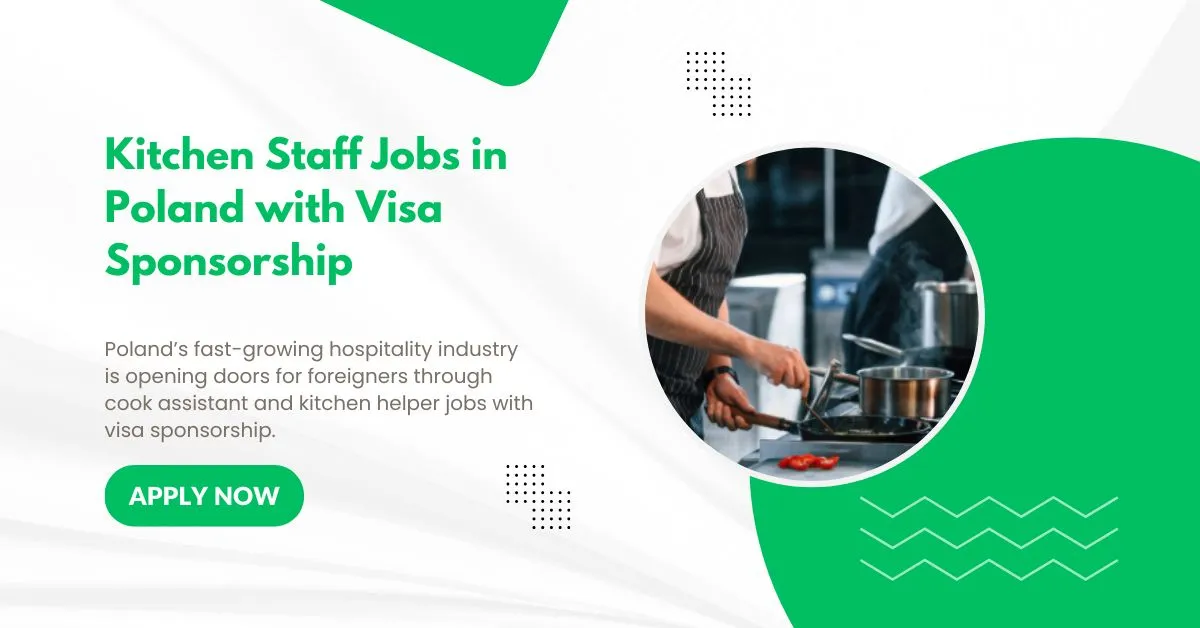
Explore kitchen staff jobs in Poland with visa sponsorship for 2026, offering competitive salaries ranging from PLN 3,000 to 5,000 per month depending on experience and restaurant size. Responsibilities include food preparation, cooking, cleaning, inventory management, and assisting chefs in daily operations.
Employers often provide visa sponsorship, accommodation support, on-the-job training, and additional benefits. These roles are ideal for foreigners seeking culinary experience, stable employment, and the opportunity to live and work legally in Poland under employer-supported visa programs.
Why Does Poland Need Kitchen Helpers?
The increasing tourism industry, restaurant chains, and food delivery services are all contributing to Poland’s rapid growth in the hospitality sector.
Restaurants, hotels, cafes, and catering businesses all require additional help in the kitchen, but they are having trouble finding enough local employees.
As a result, many Polish companies are increasingly welcoming international candidates. Indeed, they provide visa sponsorship, particularly for those who are willing to put in a lot of effort and pick things up fast.
Who Can Apply?
- Age (20–45): This age range is a general guideline. It’s not a legal requirement for the visa, but employers often prefer candidates who are within this age bracket, as it’s typically associated with the physical stamina needed for a kitchen environment and a certain level of maturity.
- Basic Kitchen Knowledge or Willingness to Learn: While prior experience is a definite advantage, many Polish employers are willing to train new staff. What’s more important is a good attitude, a strong work ethic, and the ability to follow instructions quickly and accurately.
- Basic English or Polish: The ability to communicate is crucial for understanding instructions and working as part of a team. English is widely spoken in many businesses, but knowing some basic Polish phrases will be a huge asset and show your commitment to integrating. Many employers and recruitment agencies will offer language support.
- Good Hygiene and Work Discipline: These are non-negotiable for anyone working with food. You must be able to follow strict health and safety protocols to prevent food contamination and maintain a clean kitchen environment. Employers will assess this during interviews and training.
- First-Time Overseas Workers: Poland has a streamlined process for hiring foreign workers, making it an attractive destination for those seeking their first international work experience. The hospitality sector is a good entry point.
Salary & Benefits of Kitchen Staff Jobs in Poland
Salary and Pay
The salary for a kitchen helper in Poland is typically above the national minimum wage. As of early 2026, the minimum wage is PLN 4,666 per month, which translates to PLN 30.50 per hour. The average pay for a kitchen helper is often within the range of PLN 3,000 to PLN 3,800 per month. While this is below the minimum wage, it may reflect that these positions are often paid hourly or part-time. However, some sources suggest that the average annual salary is significantly higher.
Many jobs in the hospitality sector are paid hourly, which allows for potential earnings from overtime. Overtime work is paid at a premium, with a 50% increase for standard overtime and a 100% increase for work on nights, Sundays, or public holidays.
Benefits and Perks:
Employers in Poland often provide a range of benefits that are especially valuable for foreign workers.
- Accommodation and Meals: It’s common for hospitality employers to offer free or subsidized shared accommodation, which drastically reduces your biggest monthly expense. Many also provide free staff meals during shifts, saving you a significant amount on food costs.
- Workplace Essentials: You’ll typically be provided with all necessary uniforms and safety gear. This ensures you’re properly equipped for your role and meet health and safety standards.
- Visa and Paperwork Support: A key benefit of sponsored employment is that the employer will handle the work visa sponsorship and legal paperwork, which can be a complex and time-consuming process. This support is crucial for legally working in Poland.
- Paid Leave: In Poland, all employees are entitled to paid annual leave (20 days for less than 10 years of work experience and 26 days for more than 10 years). You’re also entitled to paid public holidays. These are legally protected rights for all workers, including foreign nationals.
Visa Sponsorship:
- Work Permit Application: The employer is the primary applicant for your work permit (
zezwolenie na pracę). They submit the necessary documents to the local government office, known as theVoivodeship Office. This document is what gives you the legal right to work for that specific company in Poland. - Visa Invitation Letter: Once the work permit is approved, the employer provides you with a visa invitation letter and the approved work permit. These are crucial documents for your visa application.
- National Long-Stay Visa (Type D): You, the employee, then use these documents to apply for a Type D national visa at the Polish embassy or consulate in your home country. This visa allows you to enter Poland and stay for up to one year.
- Legal Entry and Work: This entire process ensures that you enter Poland legally and have the right to work for the employer who sponsored you.
- Temporary Residence Permit: Upon arrival in Poland, you can apply for a temporary residence and work permit (
karta pobytu). This permit is a physical card that serves as your ID and allows you to reside and work in Poland for a longer period (usually up to three years) without having to renew your national visa annually.
How to Apply for Kitchen Staff Jobs in Poland
1. Create a Simple CV
Your CV is your primary tool for securing a job offer. It needs to be clear, easy to read, and highlight your most relevant skills and experience. A professional, one-page CV is best.
- Personal Information: Include your full name, age, nationality, and contact details (email and phone number with the country code). It is also helpful to include your WhatsApp number, as it is a common communication tool.
- Work Experience: List any experience you have in kitchens, hotels, or food preparation. If you don’t have direct experience, mention jobs that required you to work in a fast-paced environment, follow strict hygiene rules, or perform physical labor.
- Skills: Highlight key skills like physical fitness, adaptability, and teamwork. Also, clearly state your English and Polish language abilities.
- Availability: Include a statement about your willingness to relocate to Poland and start working as soon as you have the visa.
- References: While not always required in the initial application, it is good to have references from past employers ready.
2. Search for Jobs Online
You need to search on platforms that cater to employers who hire foreign workers. The key is to use specific search terms that filter for jobs with visa sponsorship.
- Targeted Search Phrases: Use phrases that specifically include “visa sponsorship,” “for foreigners,” or “with work permit.” This helps you find the right employers and avoid jobs that are only open to Polish or EU citizens.
- Job Platforms:
- Polish Recruitment Agencies: Many Polish recruitment agencies specialize in hiring foreign workers for the hospitality and food service industries. These agencies are a great resource because they often have direct relationships with employers and can help you through the entire visa and work permit process.
- International Job Boards: Websites like Indeed, LinkedIn Jobs, and EURES (the European Job Mobility Portal) often have filters for “visa sponsorship” or “work authorization” that you can use to narrow down your search.
- Directly on Hotel or Restaurant Websites: Check the career sections of major hotel chains and restaurant groups in Poland. While it may take more time, this can lead to direct contact with the employer.
3. The Visa Application Process After a Job Offer
Once you secure a job offer from a company that offers visa sponsorship, the process of obtaining your visa will begin.
- Work Permit: Your employer will apply for a work permit (
zezwolenie na pracę) on your behalf. - National Visa (D-Type): After the work permit is approved, you will apply for a National Long-Stay Visa (Type D) at the Polish embassy or consulate in your home country. This visa allows you to enter Poland to work.
- Required Documents: The embassy will require you to provide several documents, including:
- A completed visa application form.
- A valid passport.
- A recent photo.
- The formal work permit issued by the Polish authorities.
- An invitation letter from your employer.
- Proof of accommodation in Poland.
- Proof of travel medical insurance.
- Proof of sufficient financial means to support yourself, although this is often covered by your employer’s sponsorship.
Conclusion:
Poland’s fast-growing hospitality industry is opening doors for foreigners through cook assistant and kitchen helper jobs with visa sponsorship. These roles offer steady income, free accommodation, staff meals, and long-term work opportunities. For first-time overseas workers, it’s a practical entry into Europe with full legal support from employers. If you’re ready to work hard, learn, and start your international journey, Poland is an excellent place to begin
Frequently Asked Questions
How much do kitchen helpers earn in Poland
On average, kitchen helpers earn between PLN 3,000 and PLN 3,800 per month, with opportunities for overtime pay.
Do I need previous kitchen experience to apply?
Not always. Many employers provide training. A willingness to learn, good hygiene, and physical stamina are more important.