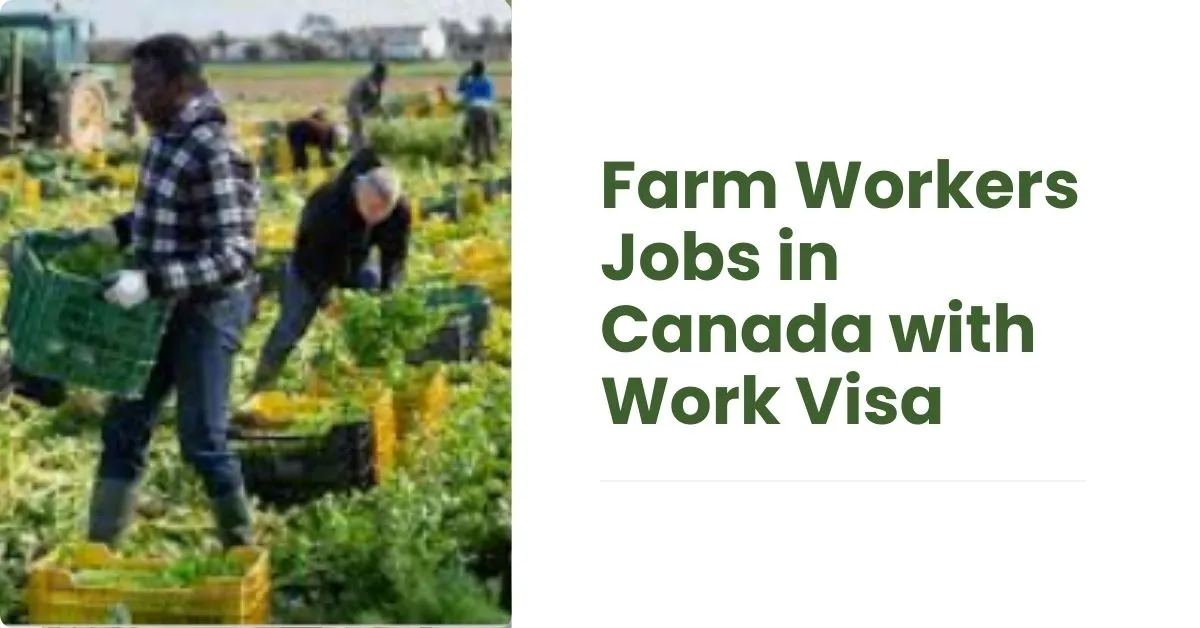
Imagine starting a rewarding career under the wide-open Canadian sky, in a country known for its beauty, opportunity, and kindness. For countless foreigners, this dream is now an incredible reality. Canada’s booming agricultural sector is actively seeking passionate individuals like you to join its workforce in 2026, and the best part? They are removing the biggest hurdles: no IELTS and no LMIA are required for many of these positions.
This isn’t just a job; it’s a gateway. A gateway to competitive earnings of up to CAD $21 per hour, a chance to gain international experience, and a potential pathway to permanent residency. Whether you have experience or are just starting out, these roles offer more than a paycheck; they offer stability, provided housing, and the profound satisfaction of essential work.
Why There is Demand for Farm Workers in Canada?
The increasing need for farmworker jobs in Canada with Work Visas is caused by a number of factors:
1. Shortage of Local Labor
- There is a severe labor shortage in Canada’s agriculture sector, especially during the busiest harvest seasons. To meet the demand for manual labor in farming activities, employers turn to foreign immigrants.
2. Expansion of the Agricultural Industry
- The agricultural sector in Canada is growing as more fruits, vegetables, and cattle are produced. Farm laborers now have more job options because to this expansion.
3. Simplified Visa Process
- The availability of work visas without the requirement for IELTS and LMIA makes it easier for foreign workers to secure jobs in Canada’s agricultural sector.
4. Government Support for Foreign Agricultural Workers
- In order to recruit farm workers, the Canadian government has launched immigration initiatives, including the Agri-Food Pilot Program and the Seasonal Agricultural Worker Program (SAWP).
5. High Demand for Seasonal Labor
- The demand for seasonal labor spikes during Canada’s busiest agricultural seasons, especially in the summer and fall, opening up a large number of job openings for foreign workers.
Read Also: Farm Labourer Jobs in Canada with Visa Sponsorship
Types of Farm Workers Jobs in Canada:
Foreign workers can find a variety of farm jobs in Canada in a number of agricultural areas. In Canada, common jobs for farm workers include:
1. Fruit Picker
- Harvesting fruits like apples, blueberries, and strawberries is the responsibility of fruit pickers. Physical endurance and the capacity to work outside are prerequisites for this position.
2. Greenhouse Worker
- Crops cultivated in controlled conditions are planted, watered, and harvested with the help of greenhouse staff. They take care of things like potting plants and keeping the greenhouse in good condition.
3. Vegetable Harvester
- On fields, vegetable harvesters select and package vegetables like lettuce, tomatoes, and cucumbers. During busy times, this position frequently requires manual labor and long hours.
4. Livestock Farm Worker
- On animal farms, livestock workers perform everyday duties like feeding the animals, cleaning the stalls, and helping to milk the cows or shear the sheep.
5. Farm Laborer
- Planting, weeding, fertilizing, and maintaining agricultural equipment are just a few of the many jobs that general farm workers complete. Both agricultural and livestock farming may be a part of this role.
6. Dairy Farm Assistant
Managing the general health and well-being of the herd, milking cows, and maintaining dairy equipment are all tasks performed by dairy farm assistants.
Salary Expectations:
The type of farming activity, location, and experience all affect farm job salaries in Canada. The following are typical hourly and monthly earnings:
Entry-Level Positions
- Fruit Picker: CAD 14 – CAD 18 per hour
- Greenhouse Worker: CAD 15 – CAD 19 per hour
Experienced Roles
- Livestock Farm Worker: CAD 16 – CAD 20 per hour
- Dairy Farm Assistant: CAD 15 – CAD 21 per hour
- Vegetable Harvester: CAD 14 – CAD 17 per hour
Visa Options for Farm Workers in Canada (No IELTS & LMIA)
Foreign applicants can apply through some visa schemes that do not require the LMIA or IELTS in order to work as farm laborers in Canada.
1. Seasonal Agricultural Worker Program (SAWP)
- During peak seasons, foreign workers from member nations are permitted to work in Canada’s agriculture sector under the SAWP. IELTS is not required for this program, and an LMIA is not required of the company.
2. Agri-Food Pilot Program
- The purpose of the Agri-Food Pilot is to address the manpower shortfall in the food processing and agricultural sectors. For qualified workers, it provides a route to permanent residency without requiring an IELTS score.
3. Temporary Foreign Worker Program (TFWP)
- Employers are permitted to engage foreign agricultural laborers for specific low-paying jobs under the TFWP without an LMIA. For seasonal farm labor, this scheme is perfect.
4. Open Work Permit for Agricultural Workers
- The Open Work Permit gives agricultural workers flexibility by removing the need for an LMIA and enabling them to change employers without requiring a new visa.
Requirements of Farm Workers Jobs in Canada:
If you are a foreign worker with a work visa who wants to work on farms in Canada in 2026, you need to fulfill the following requirements:
1. Eligibility for a Canadian Work Visa
- Apply via the Seasonal Agricultural Worker Program (SAWP) or the Temporary Foreign Worker Program (TFWP).
- possess a legitimate employment offer from a Canadian company that is authorized to employ foreigners.
- If necessary, get a labor market impact assessment (LMIA) from your company.
2. Age Requirement
- Be at least 18 years old.
3. Work Experience (Preferred but Not Always Required)
- Entry-level jobs are also available, but some employers prefer applicants with prior farm labor experience.
- On-the-job training may be offered
4. Physical Fitness
- Farm work is physically demanding, requiring workers to:
- Lift heavy loads
- Work long hours in various weather conditions
- Perform tasks such as planting, harvesting, and caring for livestock
5. Language Skills
- While not required, a basic understanding of English or French is preferred for the majority of unskilled farm occupations.
- It helps to be able to follow directions in either French or English.
6. No Formal Education Required
- A degree or diploma is not necessary for the majority of ordinary farm labor positions.
- Certain skills may be necessary for specialized positions (such as farm supervisors and equipment operators).
7. Compliance with Visa and Immigration Rules
- Pass medical and health examinations (if necessary).
- To demonstrate a spotless criminal record, present a police clearance certificate.
- If necessary, provide evidence that you have enough money to sustain yourself initially.
8. Duration of Employment
- Under initiatives like the Agri-Food Immigration Pilot, temporary farm occupations usually last six months to two years, with the possibility of renewal or application for permanent status.
Jobs Benefits of Farm Worker in Canada
- Competitive wages: Earn $17–$30 CAD per hour (about $25–$55 USD), with overtime pay, an annual equivalent of $39,000–$100,000 CAD based on experience, matching or exceeding Canadian worker rates per the 2026 National Commodity List.
- Health insurance: Employers provide private emergency health coverage or access to provincial plans (e.g., OHIP in Ontario), often including extended benefits for full-time workers and families.
- Free or subsidized housing: Clean, safe on-site accommodations (e.g., bunkhouses) at low or no cost, including utilities and sometimes meals, except in British Columbia, where deductions are limited.
- Transportation support: Employers cover inbound/outbound flights or equivalents, with partial payroll deductions allowed in most provinces.
- Job security: Reliable seasonal or year-round work in high-demand regions like Ontario, British Columbia, and Quebec, with potential for repeat contracts.
- Visa sponsorship: LMIA-exempt for many low-wage roles; open work permits allow employer changes without new visas, with 8–12 week processing.
- Career growth: On-the-job training is provided; pathways to supervisory roles or permanent residency via the Agri-Food Pilot are available, with no degree required.
- Quality of life: Work in scenic rural areas, access to nature, 5% farm store discounts, paid vacations for longer contracts, and mandated safe working conditions.
- Economic remittances: Low living costs enable significant savings to send home, supporting families while gaining international experience.
Conclusion:
The agriculture industry in Canada is still looking for foreign workers for 2026, and there are many chances available without the strict standards of the LMIA or IELTS. Aspiring farmworkers may anticipate a fulfilling experience helping one of the most agriculturally advanced countries in the world, with a variety of programs making admission easier and a variety of job options available.
Frequently Asked Questions:
Is an LMIA necessary for employers to hire foreign farmworkers?
Not all the time. The recruiting procedure is made simpler by certain programs, such as the SAWP, which permit firms to engage foreign agricultural laborers without undergoing a Labour Market Impact Assessment (LMIA).
What benefits can I expect from these farm worker jobs?
Competitive pay, which averages about CAD 15 per hour; housing (which may be subsidized); assistance with moving expenses like travel; and initial health insurance coverage are typical benefits.