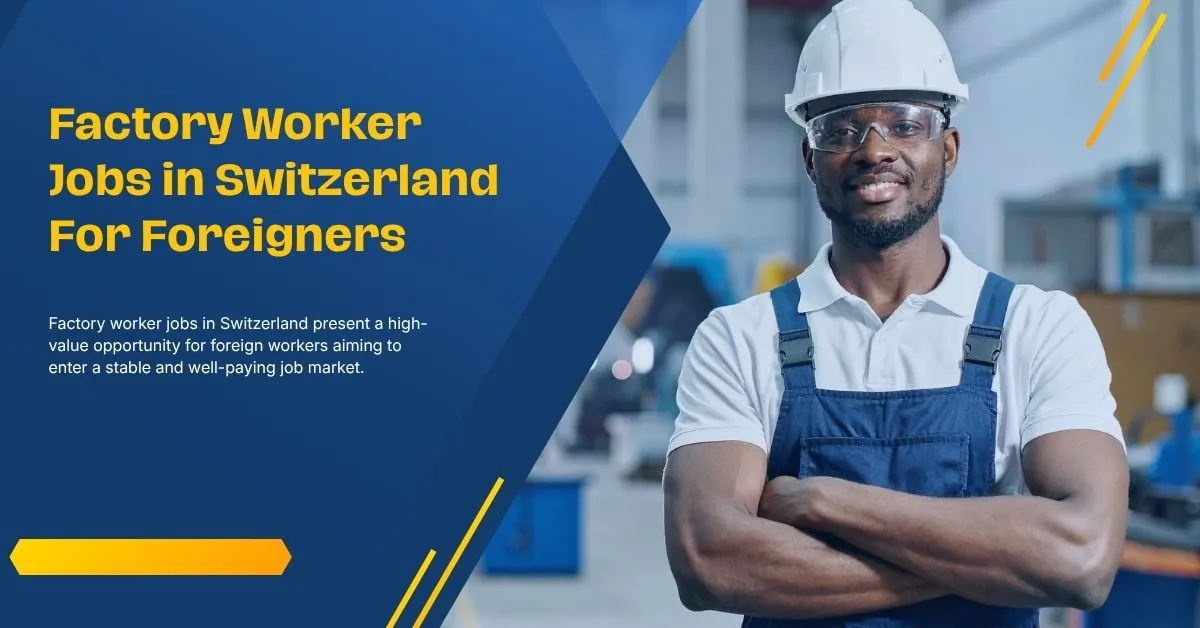
Factory worker jobs in Switzerland offer high salaries (CHF 50,000–70,000/year), strong labor protections, and visa sponsorship opportunities for skilled and reliable workers. Foreigners can apply through job portals, multinational companies, or recruitment agencies but must secure an employer-sponsored work permit.
Why is Switzerland hiring factory workers?
Switzerland’s demand for factory workers is driven by industrial growth, labor shortages, and an aging workforce. These roles are critical in maintaining production quality across multiple high-value sectors.
How big is Switzerland’s manufacturing sector?
Manufacturing contributes ~20% of Switzerland’s GDP, making it one of the strongest industrial economies in Europe. Key sectors include:
- Pharmaceuticals (e.g., Roche)
- Food production (e.g., Nestlé)
- Watchmaking (e.g., Swatch Group)
- Precision engineering and machinery
This scale creates thousands of production and assembly roles annually.
Why are there labor shortages?
Like many European countries, Switzerland faces a shortage of workers in:
- Physically demanding jobs
- Shift-based production roles
- Entry-level manufacturing positions
Companies increasingly recruit non-EU workers to fill these gaps.
How does an aging workforce affect jobs?
Over 20% of Switzerland’s population is above 65, leading to retirements across industrial roles. This opens long-term opportunities for younger international workers.
What salary can factory workers earn in Switzerland?
Factory workers in Switzerland are among the highest-paid in Europe, reflecting the country’s cost of living and strict labor laws.
Entry-Level Salary
- CHF 50,000 – 55,000/year
- Monthly: approx. CHF 4,100 – 4,600
Experienced Workers
- CHF 60,000 – 70,000/year
- Skilled machine operators may earn even more
Additional Benefits
Most employers offer:
- Health insurance coverage
- Pension contributions
- Paid leave (20–25 days/year)
- Overtime pay (often 125%–150%)
- Free meals or transport allowances
What does a factory worker actually do?
Factory roles vary by industry, but most jobs include hands-on production tasks.
Core Responsibilities
- Operating machinery and production equipment
- Assembly line work (electronics, watches, packaging)
- Quality control and defect inspection
- Packaging, labeling, and shipping
- Maintaining hygiene and safety standards
- Inventory and raw material handling
What are the requirements for foreigners?
To work in Switzerland as a factory worker, you must meet both job and immigration criteria.
Basic Qualifications
- High school diploma or equivalent
- Physical fitness for manual work
- Attention to detail (critical in Swiss industries)
Experience
- Preferred: 1–2 years in manufacturing or production
- Skills in machinery operation are a strong advantage
Language Skills
Depending on region:
- German (Zurich, Basel)
- French (Geneva, Lausanne)
- Italian (Ticino)
Some roles accept basic English, but local language improves hiring chances.
Work Permit & Visa
Non-EU workers must:
- Get a job offer first
- Employer proves no EU candidate is available
- Apply for a Swiss Work Permit (L or B Permit)
How to apply for factory jobs in Switzerland?
Follow a structured approach to improve success rate.
Step 1: Target the right employers
Focus on large companies and industrial hubs like:
- Zurich (manufacturing & logistics)
- Basel (pharmaceuticals)
- Geneva (precision industries)
Step 2: Use trusted job portals
- Indeed
- JobUp
Search using terms like:
- “Factory Worker Switzerland Visa Sponsorship”
- “Production Operator Switzerland”
Step 3: Prepare a strong CV
Highlight:
- Machinery experience
- Production line work
- Safety compliance knowledge
- Language skills
Step 4: Apply through recruitment agencies
Agencies help foreigners connect with Swiss employers and manage visa steps.
Step 5: Secure your work permit
Once selected:
- Employer submits application
- Provide passport, contract, qualifications
- Wait for approval (4–12 weeks)
Conclusion
Factory jobs in Switzerland provide excellent income, stable employment, and a pathway into Europe’s workforce. While visa requirements are strict, candidates with relevant skills, discipline, and preparation can secure rewarding roles in top industries like pharmaceuticals, food production, and precision manufacturing.
Frequently Asked Questions
Can foreigners get factory jobs in Switzerland?
Yes, but mostly through employer sponsorship. Non-EU candidates must prove skills and secure a job offer first.
Is IELTS required for Swiss factory jobs?
No, IELTS is not mandatory. However, basic German or French is often required.
How long does a Swiss work permit take?
Typically 4 to 12 weeks, depending on employer and canton approval.
Are factory jobs permanent in Switzerland?
Many start as contract roles but can become permanent after 6–12 months.