Picture spending the summer in the middle of the Swiss countryside, where there are mountains, fresh air, and rows and rows of strawberries, raspberries, and blueberries. Imagine making between CHF 2,500 and CHF 4,000 a month while your company takes care of your visa, housing, and meals.
This is how things are for the thousands of foreign migrant workers who come to Switzerland’s berry farms every year. Early starts, long days outside, and careful handling of fragile fruit make the work hard.
Why Switzerland Needs Foreign Berry Pickers
Switzerland’s agricultural sector, particularly its lucrative berry industry, is heavily reliant on seasonal foreign labor. This dependence stems from a clear economic reality: local Swiss residents are often unwilling or unavailable to take on short-term, physically demanding work in rural areas.
This annual labor gap creates a significant opportunity for foreign workers. While the work is tough, it offers a chance to earn a competitive wage in a beautiful, high-cost country with strong worker protections.
Key Reasons for the Demand:
- Seasonal Peaks: The harvest window for delicate berries is short and intense, requiring a large, flexible workforce for a limited time.
- Physical Nature: The work is strenuous and conducted outdoors, which does not appeal to the local labor market.
- Rural Locations: Many farms are in remote, picturesque areas with small local populations.
- Precision Required: Hand-picking berries requires a careful touch to avoid bruising the fruit, making it difficult to automate fully.
Read Also: Fruits Picking Jobs in Switzerland With Visa Sponsorship
Types of Berries and Picking Methods
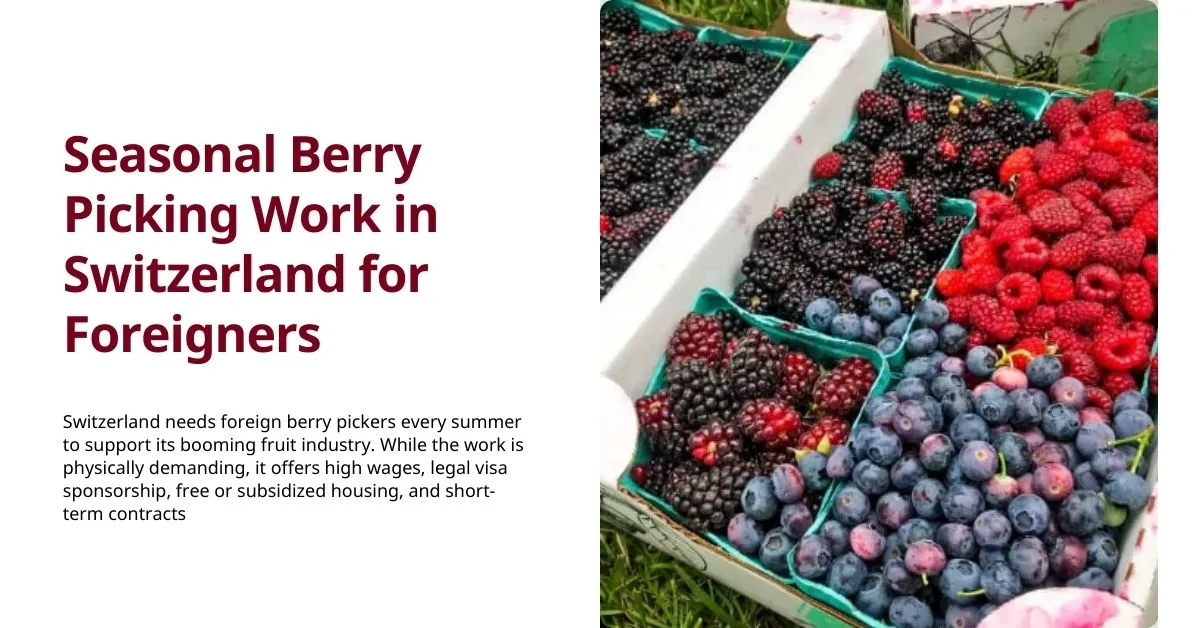
You will be harvesting high-value, perishable soft fruits, primarily:
- Strawberries (Erdbeeren / Fraises)
- Raspberries (Himbeeren / Framboises)
- Blueberries (Heidelbeeren / Myrtilles)
- Blackberries (Brombeeren / Mûres)
- Currants (Johannisbeeren / Groseilles)
Swiss farms often adhere to IP-Suisse (integrated production) or organic (Bio) standards, meaning you’ll work with minimal chemical exposure. The primary method is manual picking into small containers strapped to your waist or held in your hands.
Season and Working Hours
The season typically runs from May through September, with peaks for different berries:
- Strawberries: Late May – July
- Raspberries & Currants: June – August
- Blueberries & Blackberries: July – September
Daily Schedule:
- Early Starts: Work often begins very early (6:00 AM or sooner) to pick during the cooler hours and get produce to market fresh.
- Finishing Time: The day usually ends in the early afternoon (1:00 – 3:00 PM), though this can vary.
- Days per Week: You will typically work 5-6 days a week, depending on the weather and harvest urgency.
Salary and Earnings: A Realistic Breakdown
This is a piece-rate job (Akkord), meaning you are paid per kilogram picked. However, Swiss law provides a crucial safety net.
- Minimum Wage Guarantee: You are legally entitled to at least the cantonal (regional) minimum wage for agricultural workers, which ranges from CHF 15 to 22 per hour. Your piece-rate earnings must average out to at least this hourly rate over your pay period.
- Potential Earnings: A diligent, experienced picker can earn significantly more than the minimum. It’s common for fast workers to average CHF 20-25 per hour or more.
- Monthly Estimate: Based on a 40-50 hour week, monthly gross earnings can range from CHF 2,500 to over 4,000.
- Deductions: Be aware of legal deductions for taxes, social security (AHV), accommodation, and possibly meals. Your contract must detail these clearly.
Benefits of Seasonal Berry Picking Work:
- Legal Employment With Visa Sponsorship: Foreigners can secure seasonal work permits through sponsoring employers. This ensures legal entry, safe working conditions, and fair treatment under Swiss labor laws.
- Competitive Wages: Even for entry-level agricultural jobs, Switzerland offers higher wages than most neighboring countries. Seasonal berry pickers are usually paid hourly, and overtime during peak harvest adds extra income.
- Free or Subsidized Accommodation: Many farms provide on-site or nearby housing, often at little to no cost. This makes it easier for workers to save money while enjoying a comfortable stay.
- Meals and Basic Facilities: Employers often include meals or kitchen access, ensuring workers don’t need to worry about daily food expenses. Some farms also provide laundry and transport facilities.
- Short-Term Commitment: Seasonal berry picking typically lasts 2 to 4 months, making it ideal for foreigners who want to earn money while experiencing life in Switzerland without a long-term commitment.
- Open to Workers From Many Countries: Swiss farms welcome seasonal workers from across Europe, Asia, and Africa. Visa sponsorship helps non-EU citizens gain access to temporary agricultural jobs legally.
- Cultural Experience and Networking: Working in rural Switzerland allows foreigners to immerse themselves in Swiss culture, learn basic German, French, or Italian (depending on the region), and meet other international workers.
- Work-Life Balance in Beautiful Surroundings: Berry picking jobs are often located in picturesque Swiss valleys, mountains, and countryside. Workers enjoy fresh air, nature, and the chance to travel around Europe during their free time.
- Potential for Repeat Contracts: Seasonal workers who perform well are often invited back for future harvests, giving them stable annual opportunities and long-term earning potential
Accommodation and Living Conditions
Most farms provide accommodation, which is essential given the high cost of Swiss housing and the remote locations.
- Type: Housing is typically basic and shared (dormitories or shared rooms in a farmhouse).
- Cost: Rent is deducted from your salary, usually between CHF 300-500 per month.
- Facilities: Expect shared kitchens, bathrooms, and common areas. The standard is functional and clean.
- Meals: Some farms provide meals for an additional deduction, while others expect you to cook for yourself.
Visa Requirements For Seasonal Berry Picking Work in Switzerland
Switzerland has very strict immigration rules. Your ability to work depends entirely on your nationality.
- EU/EFTA Citizens (e.g., Germany, France, Poland, Romania): You have the right to work in Switzerland. No visa is needed, but you must register with the local municipality (Gemeinde) upon arrival.
- Non-EU Citizens (e.g., India, Nepal, Pakistan, Bangladesh, Philippines): This is much more difficult. Switzerland issues a very limited number of short-term seasonal work permits (L permits) for non-EU nationals, and these are primarily allocated to nationals of certain Balkan countries (e.g., Serbia, Bosnia, North Macedonia) through bilateral agreements.
Crucial Advice for Non-EU Applicants:
- The employer must apply for your permit well in advance, proving they cannot find an EU/EFTA citizen for the role.
- Be extremely wary of scams. Only apply through official farm websites or reputable, government-approved recruitment agencies. You should never pay a fee to an agent to “secure” a job or visa.
- If you are from a non-EU country without a specific agreement, your chances of obtaining a permit are very low.
Who They Are Looking For
Farmers prioritize:
- Physical Fitness and Stamina: For bending, lifting, and being on your feet all day.
- Resilience: To work in all weather conditions (heat, rain, cold mornings).
- Carefulness: Bruised fruit cannot be sold.
- Reliability and Strong Work Ethic: Showing up on time every day is paramount.
- Team player mentality.
Language skills (German, French, or English) are a bonus for safety instructions but are not a primary requirement.
Required Documents
If you are selected, you will need:
- A valid passport.
- A signed work contract.
- For non-EU: The work permit approval from the Swiss canton.
- Sometimes a certificate of good conduct (police clearance) or a basic medical certificate.
How to Apply For Seasonal Berry Picking Work in Switzerland for Foreigners
- Target the Right Season: Start looking and applying 3-4 months before the season starts (e.g., January-February for a May start).
- Use Reputable Sources:
- Official Job Portals:
agrarjobs.ch,jobup.ch - Farm Associations: Contact regional fruit grower associations (Obstverband).
- Official Channels: The Swiss EURES portal for EU citizens.
- Direct Applications: Identify farms in major growing regions (Valais, Thurgau, Zurich Oberland) and apply directly via their websites.
- Official Job Portals:
- Avoid Scams: Never send money for a “visa processing fee” or “job guarantee.” Legitimate employers will not ask for this.
- Understand the Contract: Before signing, ensure you understand the pay structure (hourly minimum vs. piece rate), deductions, work hours, and accommodation details.
Conclusion:
A berry-picking season in Switzerland is a short-term investment with a potentially high return. It is a chance to legally earn a significant income, live simply in a beautiful country, and gain a unique cultural experience. The work is hard, but the rewards both financial and personal are very real.
If you are resilient, reliable, and ready for a challenge, your Swiss summer awaits. Start your search early, target reputable employers, and prepare for an unforgettable adventure.
Frequently Asked Questions:
What is the accommodation really like?
It is functional, not luxurious. Expect shared dormitory-style rooms in a farmhouse or separate building with shared kitchens and bathrooms. The standard is clean and basic, designed for workers to sleep and eat after a long day.
As a non-EU citizen, what are my real chances?
Honestly, it is challenging. The quotas are limited and prioritized for citizens of Balkan countries with bilateral agreements. Your best bet is to apply extremely early through the largest farm associations and official government channels. Consider this your primary option only if you are from a country with a known bilateral agreement.