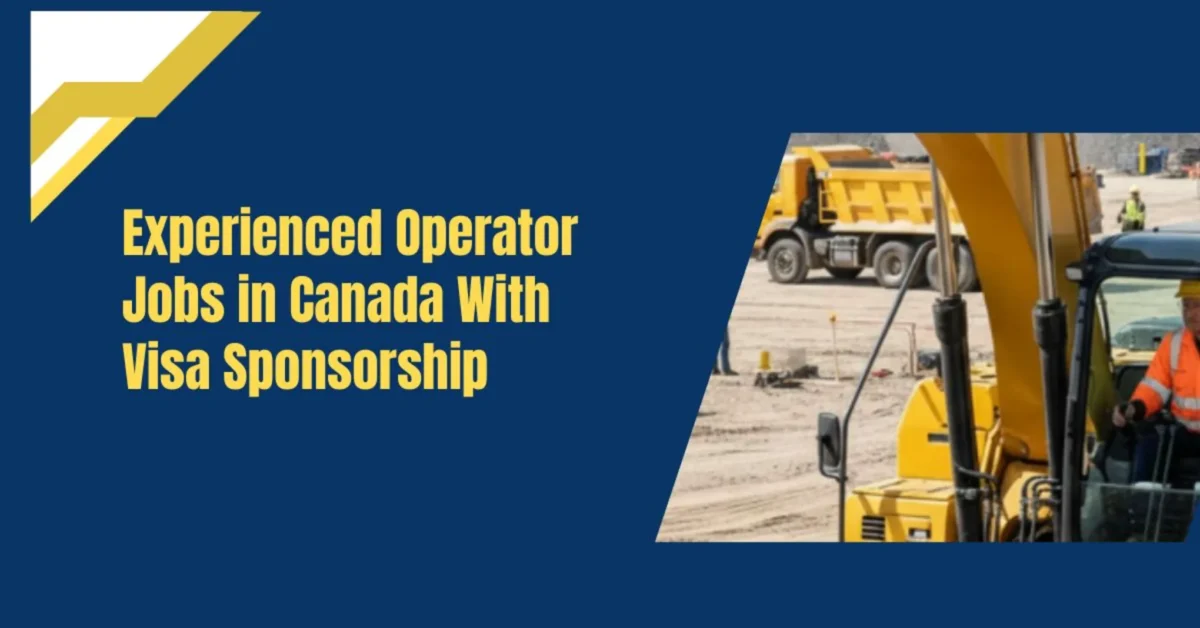
Looking to advance your career in a high-demand industry? Experienced operator jobs in Canada in 2026 offer skilled workers the chance to operate heavy machinery, manage production lines, and oversee quality control while earning CAD 20–40 per hour.
With visa sponsorship, accommodation support, and career growth opportunities, this is the perfect pathway for international workers to live and work legally in Canada while gaining valuable experience in construction, manufacturing, and heavy equipment operation.
Details of Experienced Operator Jobs in Canada
Key Points
Construction, manufacturing, and heavy equipment operation are just a few of the industries in Canada that use experienced operators. Important duties could consist of:
- Heavy Equipment Operation: Operating heavy machinery on construction sites, such as cranes, excavators, and bulldozers.
- Manufacturing Equipment Operation: Monitoring the functioning of machinery in manufacturing facilities is known as manufacturing equipment operation.
- Production Line Supervision: Manufacturing line supervision is the management and quality and efficiency optimization of manufacturing processes.
- Quality Control Ensuring that equipment operates and is maintained properly to satisfy safety and quality standards is known as quality control.
Responsibilities of Experienced Operator Jobs in Canada
- Operate Heavy Equipment:
- Use heavy equipment, including cranes, bulldozers, excavators, and loaders, in mining, construction, or manufacturing settings in a safe and effective manner.
- Conduct Pre-Operational Checks:
- Examine the equipment every day to make sure it is in good operating order and to spot any safety risks or maintenance requirements.
- Equipment Maintenance:
- Conduct routine maintenance, including cleaning, lubricating, and minor repairs, to keep machines in optimal working order.
- Follow Safety Protocols:
- Follow stringent safety guidelines and protocols to prevent mishaps or damage. This entails donning the proper safety equipment, abiding by traffic control strategies, and respecting workplace safety laws.
- Load and Unload Materials:
- Use equipment to load, transport, and unload materials such as earth, rocks, gravel, or construction debris, ensuring proper weight distribution and handling.
- Coordinate with Team:
- Work together with crew members, supervisors, and other equipment operators to guarantee efficient operations, project schedules, and well-coordinated duties on building sites.
- Maintain Logs:
- Maintain thorough records of all maintenance procedures, operating hours, and any problems or events involving the use of the equipment.
- Troubleshoot Problems:
- Diagnose and fix equipment problems as soon as possible to reduce downtime and guarantee project deadlines are fulfilled.
- Adhere to Environmental Standards:
- Manage dust, noise, and trash in accordance with standards when operating machinery to reduce its negative effects on the environment.
- Ensure Proper Loading/Unloading:
- Supervise the loading and unloading of building supplies or goods, making sure that everything is positioned safely.
Jobs Benefits of Experienced Operator in Canada
Visa Sponsorship:
- Employers expedite the immigration procedure for foreign candidates by offering crucial assistance in acquiring the required work permit. This facilitates lawful living and employment in Canada.
Competitive Compensation:
- Experience, skill level, and the employer all affect experienced operators’ pay. Hourly wages usually fall between CAD 20 and CAD 40, while higher compensation may be possible depending on a function or area of competence.
Accommodation Assistance:
- For foreign workers, some firms provide help in locating appropriate housing. This may facilitate and ease the process of moving to Canada.
Career Advancement:
- The industry offers a wealth of chances for career advancement. Operators with greater experience may be able to rise to more senior positions in their industry, receive additional training, or obtain specialized certifications.
Eligibility Criteria:
Relevant Experience:
- It is necessary to have prior experience operating heavy machinery or working in manufacturing. This could involve familiarity with particular industry-related apparatus or equipment.
Certifications:
- It is frequently necessary to possess the necessary certifications for operating equipment or industry-specific requirements. Certifications for using cranes, bulldozers, forklifts, and other heavy equipment may fall under this category.
Language Proficiency:
- For efficient communication in the job, a basic level of English ability is required. Depending on the area or sector, certain companies could need extra language proficiency.
Legal Work Authorization:
- Candidates must be legally permitted to work in Canada. This entails having a current work permit or getting sponsorship from a Canadian employer. It can be necessary for the employer to submit a work permission application on the applicant’s behalf.
Visa Requirements:
1. Secure a Job Offer from a Canadian Employer
You normally need a legitimate job offer from a Canadian business in order to work in Canada. In order to prove that hiring a foreign worker won’t have a detrimental effect on the Canadian labor market, the company may need to get a Labour Market Impact Assessment (LMIA) for the majority of work visas.
2. Employer-Specific Work Permit
You can apply for an employer-specific work permit after receiving a job offer. With this authorization, you can work for the particular company that made the employment offer. Among the prerequisites are:
- Labour Market Impact Assessment (LMIA): In most cases, your employer needs an LMIA, which proves that there is a need for a foreign worker to fill the job.
- Job Offer Letter: A formal job offer from a Canadian employer.
- Contract: A detailed contract outlining your job duties, salary, and working conditions.
- Medical Exam: Depending on the type of job, you might need a medical exam.
- Proof of Identity: A valid passport or travel document.
- Proof of Qualifications: Certificates, diplomas, or degrees relevant to the job, and proof of work experience.
- Proof of Financial Support: Evidence that you can support yourself and any accompanying family members during your stay in Canada.
- Biometrics: In some cases, you may need to provide biometric information (fingerprints and a photo).
- Application Fee: Payment of the required processing fee.
3. Language Proficiency
Reading safety instructions, following instructions, and communicating at work all require a basic level of English proficiency. A language test, like the IELTS or CELPIP, may be required by some businesses, particularly while processing visas.
4. Health and Legal Requirements
- Medical Examination: You may need to undergo a medical exam to ensure that you do not have any contagious diseases.
- Police Clearance Certificate: To show that you do not have a criminal record.
- Proof of Funds: Demonstrate that you can financially support yourself and your dependents during your stay in Canada.
- Intent to Leave Canada: Prove to an officer that you will leave Canada when your work permit expires.
Expected Wages:
Wages for Experienced Operator Jobs in Canada can vary based on experience, skills, and the employer. On average, hourly rates typically range from CAD 20 to 40, with potential variations.
Conclusion:
With competitive pay, perks, and visa sponsorship, experienced operator employment in Canada provides exciting prospects in manufacturing, construction, and heavy equipment operation. This is your opportunity to advance your career in Canada and join a developing industry if you possess the requisite training and credentials. Apply right away for a fulfilling position in a stimulating workplace!
Frequently Asked Questions:
What are the wages for experienced operator jobs in Canada?
Experienced operators usually make between CAD 20 and CAD 40 per hour, depending on location, skill level, and other criteria. Specialised roles may offer higher compensation.
What are the responsibilities of an experienced operator in Canada?
In Canada, skilled operators are in charge of running heavy equipment including excavators, cranes, and bulldozers; performing maintenance; adhering to safety regulations; and coordinating with teams on manufacturing, mining, or construction sites.