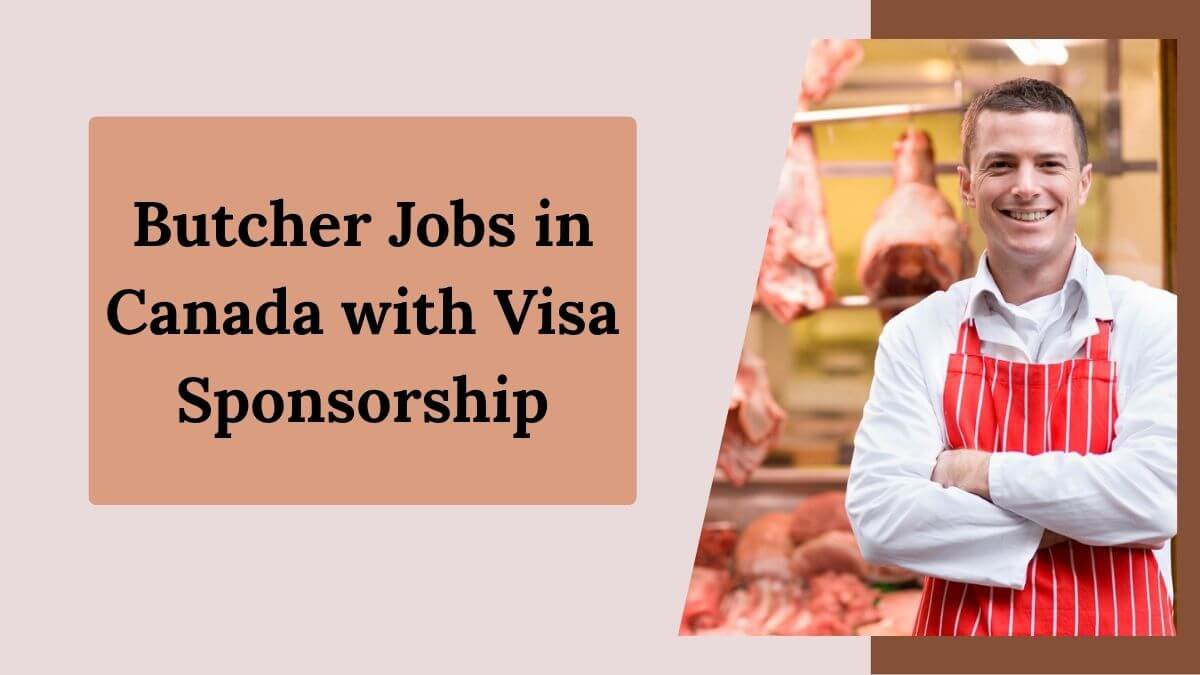
Imagine turning your passion for skilled meat preparation into a stable career in Canada while earning CAD 30,000–50,000 per year. Canada’s meat production and retail sectors urgently need qualified butchers. With visa sponsorship available, foreigners can join grocery stores, meatpacking plants, and specialty butcher shops, gaining hands-on experience, career advancement, and a fulfilling trade in a growing industry.
Details of Butcher Jobs in Canada with Visa Sponsorship
Key Points
- Country: Canada
- Job Title: Butcher Jobs
- Experience: Few Years
- Education: Diploma
- Visa Sponsorship: Yes
Benefits of Butcher Jobs in Canada
- Stable Jobs: Butchers are an important part of the food supply chain, so there will always be work for them in stores, meat shops, and processing plants.
- Good Earning Potential: Wages are competitive, and there are chances to earn extra money through overtime, tips (in retail settings), and bonuses in areas that are in high demand.
- Hands-On Skilled Trade: This is a useful, physical job for people who like to use their hands and learn old crafts.
- Low Barrier to Entry: Many jobs don’t require a lot of schooling and offer training on the job or internships.
- Chances to move up in your career: If you’re a skilled butcher, you can become a manager, open your own butcher shop, or specialize in cutting fine meat.
- Job Satisfaction: Taking pride in making good cuts and helping people directly in stores.
- Physical Activity: If you don’t like sitting at a desk all day, this is the perfect job for you.
- Work Variety: Tasks like cutting, grinding, trimming, packaging, and helping customers make the work interesting.
- Benefits of Working in the Food Industry: Employers often offer discounts on meat and other food items.
- Opportunities for Self-Employment: Skilled butchers can run their own businesses, food trucks, or specialty meat brands, which means they can work for themselves.
Requirements for Butcher Jobs
Education and Training:
- Formal education isn’t always necessary, but it’s always a good idea.
- Having a college degree or something similar is helpful, especially in related areas.
- Specialized training programs are preferred, especially in the culinary arts or preparing meat.
Experience:
- Relevant Experience:
- At least two to three years of experience in demolition, meat processing, or a related area.
- It is helpful to have worked in a butcher shop, a grocery store, or a meat preparation plant before.
Certifications:
- Culinary or Meat Processing Certifications:
- Food Safety: Getting certified in how to keep food safe.
- Portioning meat: being able to cut and divide meat well.
- Management Certificates: Shows they can lead and handle people in food processing environments
Duties of Butcher Jobs in Canada:
- Meat Preparation: Prepare meat by cutting it up and cooking it according to what the customer wants and what the company’s rules are.
- Quality Control: Quality control means making sure that safety rules are followed and that only high-quality meat is sold.
- Inventory Management: Inventory management means keeping track of what you have in stock, ordering what you need, and making sure there is fresh meat on hand.
- Customer Service: Helping customers with their purchases, telling them which meat to buy, and meeting their specific needs.
- Package and Label: Putting meat in the right boxes and labels so it can be sold.
Average Salary:
There is a wide range of salaries for butchers in Canada. The exact amount relies on their level of experience, where they work, and the company they work for.
Factors Affecting salary
- Butchers who know more about their jobs can make more money.
- How much you get paid may depend on where you live and how many people need butchers.
- Bigger supermarket chains and meat processing plants usually pay more and give better perks than smaller butcher shops.
Types of Jobs:
These are some of the jobs that are out there:
- As a retail butcher, you’ll deal directly with customers, prepare finished meat, package it, and show it off.
- As an industrial butcher, you’ll cut up a lot of meat into pieces, run tools, and work with different types of meat products.
- Special butcher: Making tasty, unique cuts of meat and working with natural or unusual foods.
How to Apply for Butcher Jobs in Canada with Visa Sponsorship?
If you are interested in applying, please click on the link above
Conclusion:
Canada is going to need skilled butchers in 2026. This is a great chance for workers who want a job that they will enjoy and that will last. To become a butcher in Canada, you need to be skilled. The pay is good, the benefits are great, and there are ways to move up in the company. There are many job possibilities in Canada, and the meat processing industry is strong and needs people with experience in retail, industrial, or specialty butchery.
You can have a great life in Canada, get a good job, and have your visa paid for if you meet the standards and use the training programs that are there. Get ready for the next step in your career by checking out the meat processing business in Canada. There are lots of exciting jobs available.
Frequently Asked Questions
What is a butcher’s job in Canada?
Here are some of the main things that butchers, both retail and wholesale, have to do, along with some of the physical jobs that go along with them: Prepare custom and/or standard cuts of meat, chicken, fish, and shellfish in other ways for sale at self-service counters or based on what customers order.
Do you need qualifications to be a butcher?
To get an intermediate apprenticeship, you’ll usually need some GCSEs, mainly English and math, or something similar. For an advanced apprenticeship, you need 5 GCSEs with scores 9 to 4 (A* to C), or the equivalent, in subjects like English and math.
What is the average salary for a butcher in Canada?
Butchers in Canada can make anywhere from CAD 30,000 to CAD 50,000 a year, based on their experience, where they work, and the company they work for.