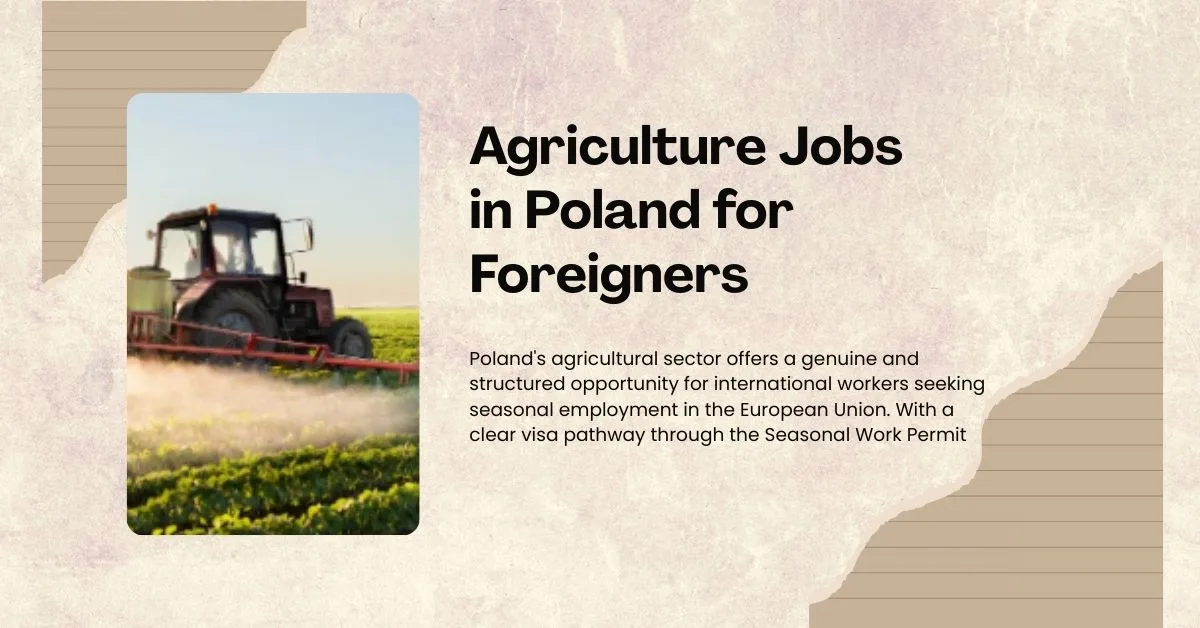
Agriculture jobs in Poland pay PLN 4,200–6,000 per month (gross) and are available to foreign workers through a Seasonal Work Permit and Type D National Visa. Most roles are temporary (up to 9 months yearly) and often include subsidized accommodation.
Poland remains one of the European Union’s leading producers of apples, poultry, berries, and vegetables, creating steady seasonal demand for farm labor.
Why Is Poland Hiring Foreign Farm Workers?
Poland faces labor shortages in rural regions due to urban migration and an aging workforce. Farms in areas near Lublin, Mazowieckie, and Wielkopolskie actively recruit seasonal workers during spring and summer harvest peaks.
Key employment entities involved:
- Seasonal Work Permit (Zezwolenie na pracę sezonow ą)
- Employer Declaration Registration
- Type D National Visa
- Local Labor Office (Powiatowy Urząd Pracy)
- Employment contract (Umowa o pracę or Umowa zlecenie)
Work permits are regulated under Polish labor law and supervised by the Ministry of Family, Labour, and Social Policy.
EU citizens do not require a work permit. Non-EU nationals must complete formal visa procedures.
What Types of Agriculture Jobs Are Available?
What Do Farm Workers Do?
Farmworkers plant, harvest, and sort crops such as apples, strawberries, potatoes, and cabbage. Tasks include field maintenance, irrigation setup, and preparing produce for distribution.
What About Livestock Workers?
Livestock workers feed animals, clean enclosures, monitor dairy cows or poultry, and assist in basic animal health checks.
Are Machinery Operators Needed?
Experienced workers may operate tractors, harvesters, or sorting machines and perform basic equipment maintenance.
How Does Greenhouse Work Differ?
Greenhouse workers operate in controlled environments growing tomatoes, cucumbers, or flowers year-round. Duties include planting, trimming, and packaging for export.
What Is the Salary for Farm Workers in Poland?
Poland’s minimum wage has increased significantly compared to earlier years.
Updated Salary Range (Gross):
- Entry-Level: PLN 4,200–4,800/month
- Experienced Worker: PLN 5,000–6,000/month
- Hourly Rate: Approx. PLN 27–35/hour
Overtime may apply during peak harvest months.
For official wage standards, refer to the Government of Poland labor regulations.
Accommodation:
- Often provided by employer
- May involve shared housing
- Sometimes partially deducted from wages
What Is the Seasonal Work Visa Process?
Foreign workers typically require:
Seasonal Work Permit
Issued for up to 9 months in one calendar year.
Type D National Visa
Allows legal residence in Poland for employment.
Employer Declaration
The Polish employer must register the job offer at the local labor office before the worker applies for a visa.
Visa applications are processed through Polish embassies and consulates abroad.
What Are the Eligibility Requirements?
To qualify for agriculture jobs in Poland:
Minimum age 18+
Physically fit for manual labor
Willing to work outdoors in various weather conditions
Basic English or Polish (helpful but not mandatory)
Clean criminal record
Previous farm experience is preferred but not mandatory for entry-level roles.
What Is the Work Environment Like?
Agricultural workers typically:
- Work 8–10 hours daily
- Work 5–6 days per week
- Perform physically demanding tasks
- Work outdoors during spring and summer
Weather conditions may include heat, rain, or early morning shifts during harvest season.
Step-by-Step: How to Apply for Farm Jobs in Poland
Step 1: Prepare a Basic CV
Include:
- Manual labor or farm experience
- Physical work capability
- Language skills
- Availability period
Step 2: Search Trusted Platforms
Use:
- Official Polish job portals
- EURES (EU job mobility network)
- Verified farm recruitment agencies
Step 3: Verify Employer Registration
Confirm the employer has registered the seasonal work declaration at the local labor office.
Step 4: Apply for Type D Visa
Submit required documents at the Polish embassy after receiving work permit documentation.
Benefits of Agriculture Jobs in Poland
- Legal EU work experience
- Competitive monthly income
- Accommodation support
- Seasonal earning opportunities
- Exposure to European agricultural practices
These roles are particularly attractive for workers seeking short-term overseas income.
Conclusion
Carpenter jobs in Canada in 2026 offer more than steady income they provide a structured legal pathway through LMIA-based work permits, competitive pay between CAD 40,000 and 50,000 annually, and opportunities across residential, commercial, and infrastructure projects.
With strong demand in multiple provinces and benefits such as possible accommodation support and overtime pay, skilled carpenters can build a stable future in one of the world’s most developed construction markets. The key is securing a verified job offer, ensuring LMIA approval where required, and following official Canadian immigration procedures carefully.
Frequently Asked Questions
What is the salary of farmworkers in Poland?
Between PLN 4,200 and PLN 6,000 per month (gross), depending on experience and job type.
Is visa sponsorship available?
Yes. Employers provide documentation for a Seasonal Work Permit and Type D National Visa.
Is experience required?
Not always. Entry-level roles do not typically require prior farm experience.
Is accommodation provided?
Often yes, though housing may be shared and partially subsidized.
Can seasonal farm jobs lead to permanent residence?
Seasonal permits are temporary. Long-term residence requires separate work permits and eligibility under Polish immigration programs.