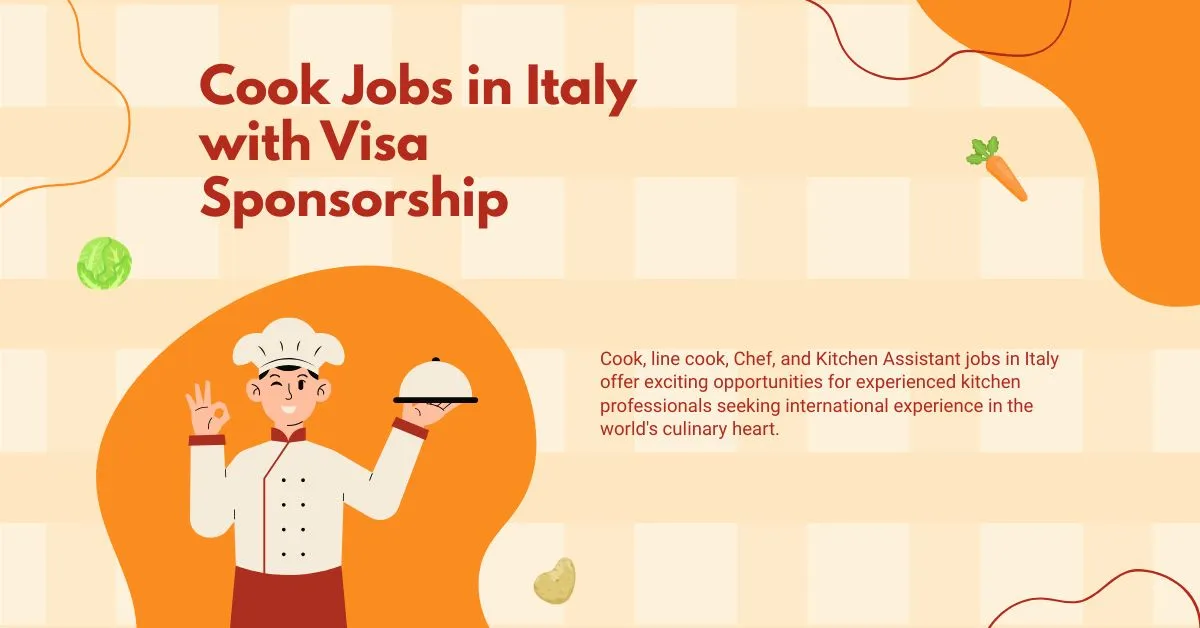
Cooking in Italy isn’t just a job; it’s stepping into a culture where food is taken seriously, crafted with pride, and shared with passion. Restaurants across cities like Rome, Milan, and Venice are looking for cooks who can keep up with this energy and deliver quality every day.
Can you get a cook job in Italy with visa sponsorship? Yes, but mainly if you have cooking experience. Salaries range from €1,200 to €2,800/month, and employers in tourism-heavy cities like Rome, Milan, and Venice often hire skilled kitchen staff due to strong demand in restaurants and hotels.
Why Are Cook Jobs in Italy Always in Demand?
Italy’s hospitality sector is powered by tourism and traditional cuisine. Restaurants, hotels, and seaside resorts operate year-round, especially in major cities like Rome, Milan, and Venice.
The industry depends heavily on:
- Seasonal tourism (summer + holidays)
- Traditional Italian restaurants (trattorias, pizzerias)
- Hotels and resorts across coastal regions
What Does a Cook Do in Italy?
Cook jobs in Italy involve preparing meals, managing ingredients, and maintaining kitchen flow in fast-paced environments.
Job Overview
- Job Title: Cook / Line Cook / Chef / Kitchen Assistant
- Country: Italy
- Job Type: Full-Time / Seasonal / Contract
- Experience: 1–3 years (preferred)
- Salary: €1,200 – €2,800/month
- Visa Sponsorship: Yes (mainly skilled workers)
What Are the Daily Responsibilities?
Kitchen work in Italy is structured, fast, and teamwork-based.
Core Duties:
- Preparing and cooking meals based on recipes
- Chopping, cleaning, and storing ingredients
- Maintaining hygiene and food safety standards
- Assisting head chefs and kitchen supervisors
- Plating and presenting dishes
- Monitoring food freshness and quality
- Cleaning kitchen tools and stations
Requirements: Who Can Apply?
Cook jobs in Italy are more skill-focused compared to general labor jobs.
Basic Requirements:
- Basic English or Italian communication
- 1–3 years cooking or kitchen experience (preferred)
- Understanding of food safety and hygiene
- Ability to work in fast-paced environments
- Valid passport
- Clean criminal record
- Teamwork and discipline
Optional but Helpful:
- Culinary school training
- Experience in hotel or restaurant kitchens
- Knowledge of Italian cuisine
Salary Breakdown
Cook salaries in Italy depend on experience, location, and type of restaurant.
| Level | Monthly Salary |
|---|---|
| Entry-Level | €1,200 – €1,600 |
| Mid-Level | €1,600 – €2,200 |
| Experienced Chef | €2,200 – €3,500+ |
Additional Earnings:
- Tips (in some restaurants)
- Overtime pay
- Free meals during shifts
- Seasonal bonuses
Benefits: What Do You Get?
Italy’s hospitality sector often includes practical job benefits.
Common Benefits:
- Free meals during work
- Accommodation (some employers provide it)
- Health insurance
- Overtime pay and tips
- Paid holidays
- Career progression opportunities
Visa Sponsorship Process (Italy Work Permit System)
To legally work in Italy, you must follow the official immigration process.
Step-by-Step:
- Get a job offer from an Italian employer
- The employer applies for Nulla Osta (work authorization)
- You apply for a work visa at the embassy
- Enter Italy and begin employment
Why Choose Cook Jobs in Italy?
Working in Italy offers both career and cultural benefits.
Key Advantages:
- Strong demand in hospitality sector
- Opportunity to learn authentic Italian cuisine
- Work in globally recognized food culture
- Career growth in restaurants and hotels
- Exposure to European culinary techniques
How to Apply for Cook Jobs in Italy?
Getting hired requires targeted applications.
Step-by-Step Process:
- Search on job portals like EURES, Indeed, Hosco
- Prepare a CV highlighting kitchen experience
- Apply only to employers offering visa sponsorship
- Attend online or in-person interviews
- Receive job offer
- Start visa process through Italian authorities
Conclusion
Cook jobs in Italy offer meaningful opportunities, especially for candidates with hands-on experience and a strong work ethic. While entry-level roles exist, visa sponsorship is more commonly offered to skilled cooks who can contribute immediately in busy kitchens.
The combination of moderate salaries, cultural exposure, and career growth makes Italy attractive for hospitality professionals. However, success depends on preparation; relevant experience, basic language skills, and understanding the visa process are key.
Frequently Asked Questions
1. Can foreigners get cook jobs in Italy?
Yes, but most visa sponsorship jobs require some cooking experience.
2. Do I need culinary training?
Not always, but it improves your chances significantly.
3. Is Italian language required?
Basic Italian is highly recommended, especially for kitchen communication.
4. Is accommodation included?
Some employers provide housing, especially in seasonal or tourist areas.