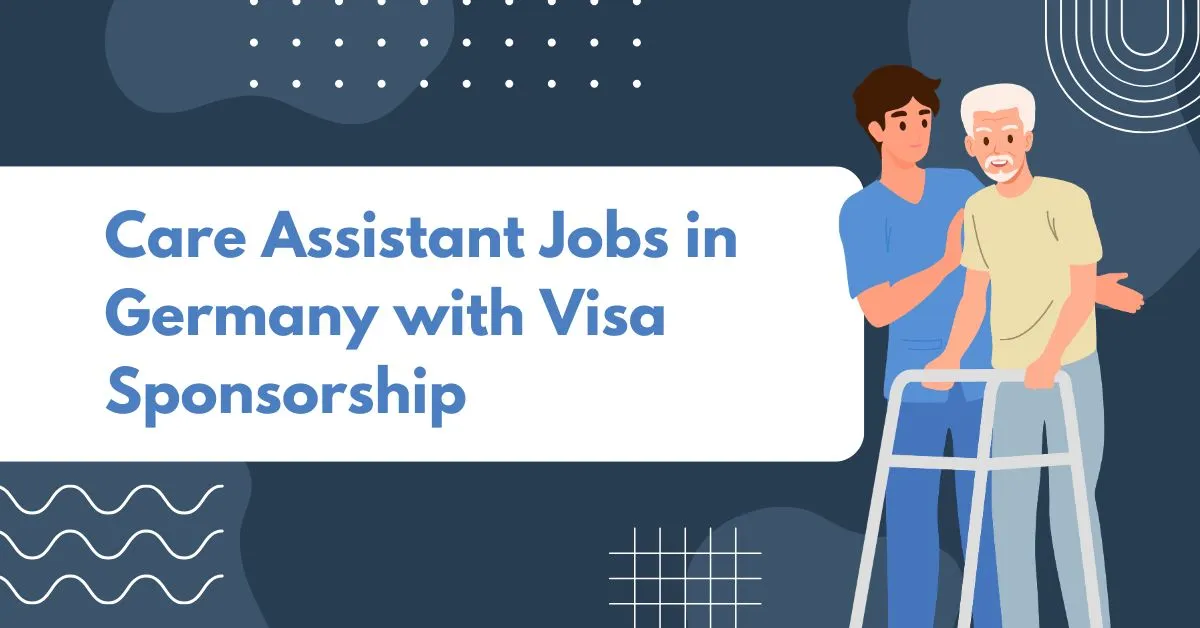
Care assistant jobs in Germany with visa sponsorship are among the most accessible healthcare opportunities for international workers due to a severe shortage in elderly and patient care staff. These roles support hospitals, nursing homes, and home-care services where demand continues to grow.
Imagine starting your day knowing your work directly improves someone’s life. In Germany’s care sector, that’s the reality. Care assistants earn between €1,500 and €3,000 per month, depending on experience and shifts. It’s not just a job; it’s meaningful work that brings dignity, comfort, and human connection every single day.
Why are care assistant jobs in Germany in high demand?
Germany’s healthcare system is under pressure due to an aging population, increasing chronic illnesses, and the retirement of local caregivers. Cities like Berlin, Munich, and Hamburg face staffing shortages in hospitals and elderly care homes.
What do care assistants do in Germany?
Care assistants (Pflegehelfer) play a critical support role in healthcare facilities. They help patients maintain dignity and comfort in daily life.
Core responsibilities include:
- Assisting with bathing, dressing, and hygiene
- Supporting elderly and disabled patients
- Helping with meals and feeding
- Monitoring basic health conditions
- Assisting nurses with routine care
- Providing emotional support and companionship
These roles are especially important in nursing homes and rehabilitation centers across Germany.
What is the salary of care assistants in Germany?
x=1500+300
Salary range:
- Entry-level: €1,500 – €1,800/month
- Average: €1,800 – €2,400/month
- Experienced workers: €2,400 – €3,000+
Key factors affecting salary:
- Work location (urban vs rural)
- Night shifts and overtime
- Employer type (private vs public care homes)
- Experience level
What are the requirements for care assistant jobs in Germany?
1. Language skills
- Minimum A2–B1 German required
- B1 strongly preferred for visa approval
2. Basic eligibility
- Valid passport
- Clean criminal record
- Basic education or care training (preferred)
- Physical fitness for caregiving work
3. Soft skills
- Empathy and patience
- Emotional resilience
- Willingness to work shifts
How does the visa sponsorship process work?
Care assistant jobs in Germany are part of regulated visa pathways supported by employers.
Step-by-step process:
- Secure a job offer from a German employer
- Sign employment contract
- Apply for work visa at German embassy
- Receive approval and travel to Germany
- Complete onboarding or training if required
Employers often assist with relocation and documentation support.
Which benefits do care assistants receive?
Germany offers strong worker protection laws for healthcare employees.
Key benefits:
- Free or subsidized accommodation
- Health insurance coverage
- Paid annual leave
- Pension contributions
- Overtime and night shift bonuses
- Job training and certification support
Long-term benefits:
- Permanent residency pathway
- Family reunification options
- Career growth into nursing roles
Where do care assistants work in Germany?
Care assistants are employed across multiple healthcare environments:
- Nursing homes (elderly care facilities)
- Hospitals and rehabilitation centers
- Home-care services
- Community healthcare programs
High-demand cities:
- Berlin
- Munich
- Frankfurt
- Hamburg
These cities face the highest caregiver shortages due to population density and aging demographics.
How can you apply for care assistant jobs in Germany?
Application steps:
- Learn German (A2–B1 level recommended)
- Prepare a structured CV (German format preferred)
- Apply through job portals or recruitment agencies
- Attend online interviews
- Receive job offer and apply for visa
Verified employers or government-approved channels like the Bundesagentur für Arbeit.
Is care assistant work in Germany worth it?
Yes, especially for entry-level healthcare workers.
Germany offers:
- Stable employment
- Visa sponsorship pathways
- Career advancement into nursing
- Permanent residency opportunities
However:
- German language is essential
- Work can be physically and emotionally demanding
- Shift work is common
Conclusion
Care assistant jobs in Germany remain one of the most realistic and high-demand opportunities for foreign workers. Driven by an aging population and workforce shortages, Germany continues to actively recruit caregivers with or without prior experience.
While the role requires basic German language skills and emotional strength, the rewards are a strong stable income, visa sponsorship, accommodation support, and long-term career growth. For many international applicants, it’s not just employment but a chance to build a secure future in Europe’s healthcare system.
Frequently Asked Questions
What is the salary of care assistants in Germany?
Care assistants earn between €1,500 and €3,000 per month depending on experience and location.
Do care assistant jobs in Germany offer visa sponsorship?
Yes, many employers in Germany sponsor visas due to ongoing caregiver shortages.
Is the German language required for care assistant jobs?
Yes, at least A2–B1 German is required for most caregiving positions.
Can foreigners become care assistants in Germany?
Yes, foreign workers are actively recruited, especially in elderly care facilities.