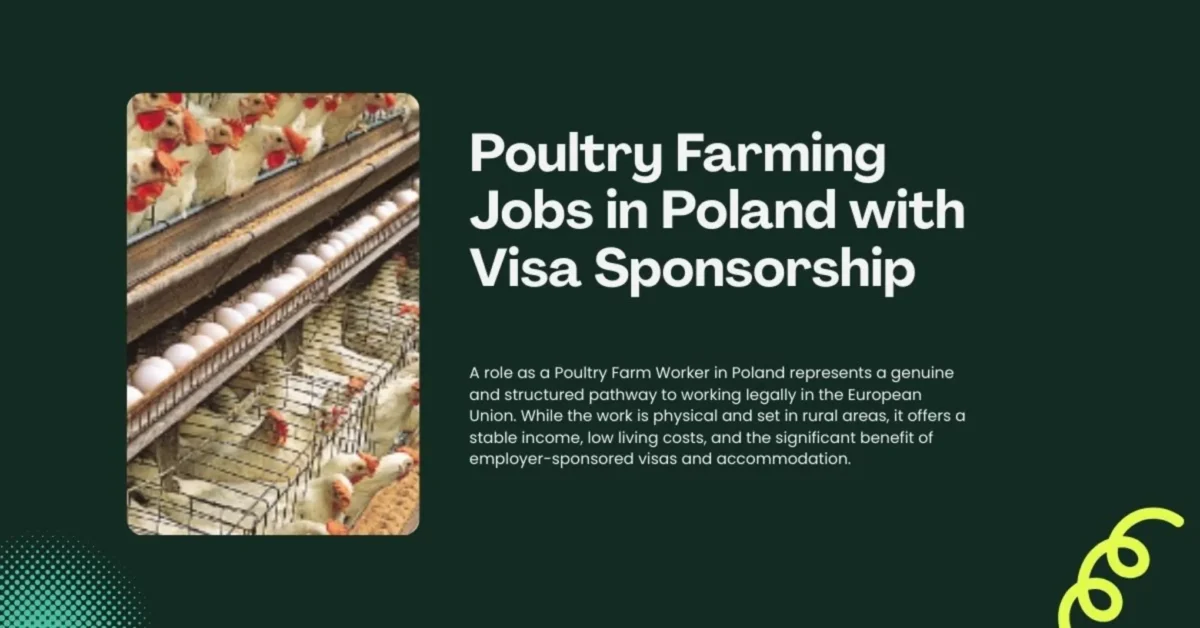
If you’re looking for an honest, stable job that offers a direct path to Europe, look no further than Poland’s thriving poultry farms. Poland’s agricultural sector is actively seeking reliable foreign workers, offering visa sponsorship for those ready for hands-on work. This isn’t a desk job; it’s physical, outdoor work that pays a fair wage and provides a legal foothold in the EU.
With a monthly salary of PLN 3,000 to 4,000, free accommodation, and full visa support, this is a real opportunity to build a new life abroad without needing a university degree. If you are hardworking, dependable, and ready for a new challenge, your European journey could start on a farm in the Polish countryside.
Why Poland Needs International Poultry Workers
Poland is a European powerhouse in poultry production, serving major markets across the EU. This booming industry, concentrated in rural regions, faces a significant shortage of local labor. To sustain their growth, Polish agricultural businesses are now actively recruiting from abroad, offering structured visa sponsorship to reliable international workers.
This isn’t a loophole; it’s a legitimate and regulated system designed to fill essential roles in a critical sector.
A Day in the Life: The Realities of the Role
This is a hands-on, entry-level position where you will be trained on the job. It’s physical but structured and purposeful.
Your core responsibilities will include:
- Feeding and watering the poultry.
- Collecting, sorting, and packaging eggs (in layer facilities).
- Monitoring bird health and reporting any concerns to supervisors.
- Maintaining strict hygiene standards by cleaning and disinfecting coops, cages, and equipment.
- Assisting with the controlled movement and loading of birds.
- Operating basic farm machinery and ventilation systems.
You will work with either broiler chickens (for meat) or laying hens (for eggs). The environment is modern and regulated, focusing on animal welfare and food safety.
Who Is the Ideal Candidate?
This role is a strong fit for you if you:
- Are between 18 and 50 years old, in good physical health.
- Have a strong work ethic, are reliable and punctual.
- Can follow detailed instructions and adhere to strict biosecurity protocols.
- Are willing to live and work in a rural community.
- Possess basic communication skills in English or are motivated to learn basic Polish.
Experience in farming, warehousing, or any manual labor is a plus, but a positive attitude and willingness to learn are the most important qualifications.
Understanding Your Legal Pathway: Visa Sponsorship
The standard route for this work is a temporary residence permit based on a work permit.
Here’s how the sponsorship process works:
- Secure a Job Contract: You receive a formal offer from a Polish employer who is licensed to hire non-EU citizens.
- Work Permit Application: Your employer applies for your work permit (zezwolenie na pracę) from the local Voivodeship Office in Poland.
- Apply for a National (D-Type) Visa: With the work permit, you apply for a long-stay National Visa at the Polish consulate in your home country. This allows you to enter Poland.
- Obtain Your Residence Permit: Once in Poland, you use your National Visa and work permit to apply for a Temporary Residence Permit, legalizing your stay for the duration of your contract (typically 1-2 years).
Your employer will guide you through this process and often provide crucial support with documentation.
Salary, Benefits, and Cost of Living
Earnings:
- Monthly Salary: Typically between PLN 3,200 to PLN 4,500 net (after tax and social security), which is approximately €750 to €1,050 or $800 to $1,150 USD.
- Overtime: Often available and paid at a premium rate.
Standard Benefits Package:
- Accommodation: Shared, subsidized housing is commonly provided.
- Meals: Access to a kitchen or subsidized meals in a staff canteen.
- Transport: Work-related transport is provided; some employers assist with airport pickup.
- Health Insurance: Full access to the Polish public healthcare system (NFZ) is mandatory and covered by your employer’s social security contributions.
- Paid Leave: Entitlement to paid annual leave according to Polish labor law.
Since most farms are in rural areas, your cost of living will be low, allowing you to save a significant portion of your income.
Where Are the Jobs Located?
Key poultry farming regions in Poland include:
- Mazowieckie (around Warsaw)
- Wielkopolskie (a major agricultural heartland)
- Kujawsko-Pomorskie
- Łódzkie
- Lubelskie
These regions offer a peaceful, countryside lifestyle.
Your Step-by-Step Action Plan to Apply
Step 1: Prepare a Clear and Honest CV
- Focus on any experience with manual work, animals, or following procedures.
- Highlight soft skills: reliability, physical fitness, and ability to work in a team.
- Clearly state: “Seeking a position with visa sponsorship.”
Step 2: Target Your Job Search Effectively
Use precise keywords on job platforms:
- “Praca w drobiarstwie dla cudzoziemców” (Poultry work for foreigners)
- “Praca w Polsce ze pozwoleniem” (Work in Poland with a permit)
- “Poultry farm worker Poland visa sponsorship”
Key Platforms to Use:
- Praca.pl and OLX Praca (major Polish job boards).
- EURES (the European job mobility portal).
- Specialized agricultural recruitment agencies that operate between your home country and Poland.
Step 3: Ace the Interview
Be prepared for a video call. Be honest about your experience and demonstrate your understanding of the role’s physical nature. Show your enthusiasm for working in Poland and your commitment to being a reliable employee.
Conclusion
A poultry farm worker role in Poland is a legitimate and accessible entry point to the European job market. Supported by visa sponsorship, a clear application process, and benefits that cover core living costs, this position offers stability and a chance to save money.
While the work is demanding, it provides a secure and structured environment for those willing to work hard. If you are ready to take a decisive step toward a European future, this role provides a solid foundation. Start preparing your application today to connect with employers seeking your dedication.
Frequently Asked Questions
What is the average monthly salary, and what benefits are included?
The average monthly pay is PLN 3,000 to 4,000. A key benefit is free or heavily subsidized shared accommodation, which drastically reduces your living expenses. Some employers may also provide meals or transport.
Do I need any experience or a degree to apply?
No. A university degree is not required, and many roles are entry-level. While any prior experience in farming, animal care, or physical labor is beneficial, employers typically provide on-the-job training for motivated and reliable candidates.